3. We accelerated industrial structural adjustment and vigorously promoted economic transformation and upgrading.
Through exerting market forces and enhancing policy guidance, we sped up the transformation of the economic growth model and gave new impetus to the improvement and upgrading of the industrial structure.
1) New breakthroughs were made in innovation.
Spending on R&D as a percentage of GDP reached 2.09% in 2014, with corporate R&D spending accounting for over 76% of the total. Cutting-edge innovations such as the Tianhe-2 supercomputer, super-hybrid rice, the Chang'e lunar lander, satellite applications, and the deep-sea manned submersible Jiaolongcaptured global attention. Breakthroughs were made in a number of key and core technologies and industrial applications, covering the fields of biology, intelligent manufacturing equipment, ocean engineering equipment, regional airliners, mobile Internet, and broadband network equipment. There was rapid development in strategic emerging industries, such as cloud computing, the Internet of Things, and big data. Micro-innovation, crowd innovation, and other innovative and entrepreneurial models showed robust growth. The value-added of the high-tech manufacturing sector rose by 12.3%, four percentage points higher than that of industrial enterprises with annual revenue of 20 million yuan or more from their main business operations.
2) Good headway was made in transforming and upgrading traditional industries.
The technological upgrading of enterprises in traditional industries was carried out vigorously. Initiatives to adjust the distribution of key industries and relocate industries gathered pace. Steady progress was made in the elimination of excess production capacity. Tasks set out at the beginning of last year to eliminate excess production capacity in 15 key industries were completed as planned, effectively curbing the blind expansion of production capacity. Important gains were made in turning the coal industry around.
3) The service sector sustained rapid growth.
New business types and models displayed robust development. Cultural and creative industries and design services were further integrated with related industries, and a mid-to-long-term development plan and three-year action plan were introduced for the logistics industry. The value-added of tertiary industry (the service sector) amounted to 30.7 trillion yuan, increasing by 8.1% over the previous year and accounting for 48.2% of the GDP, 5.6 percentage points higher than that of secondary industry.
4) Basic industries and infrastructure developed quickly.
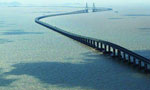
The country's comprehensive transportation system was further improved, with the total length of railway lines and expressways open to traffic both exceeding 110,000 kilometers. National internet backbone access points were built in seven more cities, and fiber optic broadband was made available to another 30 million households or so. The installed capacity of hydropower facilities nationwide exceeded 300 million kilowatts. Major progress was made in the exploration and exploitation of coal seam gas, shale gas, and deep-water oil and gas. Construction began on 57 of 172 major water conservancy projects that have been planned. The first phase of the central route of the South-to-North Water Diversion Project was put into operation, providing drinking water from the Yangtze River to 60 million residents in the Beijing-Tianjin-Hebei region.
4. We bolstered the foundations of agricultural and rural development and made advances toward balanced development between urban and rural areas and between regions.
Throughout the year we vigorously developed modern agriculture, steadily promoted a new type of people-centered urbanization, optimized the spatial planning of economic development, and took new steps in balancing development between urban and rural areas and between different regions.
1) Agriculture and rural areas showed good development momentum.
Investment related to agriculture, rural areas, and farmers was further increased, and the development of agricultural infrastructure was supported. We oversaw the orderly transfer of land operation rights, leading to the transfer of around 30% of contracted land-use rights in rural areas. We formulated an overall plan to control serious agricultural environmental pollution, guidelines on establishing demonstration zones for ecological conservation and improvement, a plan to reform state forestry farms, and guidelines on reforming state forestry areas. Total grain output grew for the 11th consecutive year, reaching 607 million metric tons. Production of agricultural and sideline products, including meat, eggs, milk, fruit, vegetables, and fish, remained stable. We guaranteed the provision of safe drinking water for over 66 million more rural residents, renovated dilapidated houses for 2.66 million rural households, and reduced the number of rural population living in poverty by 12.32 million.
2) A new type of urbanization was advanced in an active yet prudent way.
We issued and implemented a national plan on a new type of urbanization, and carried out supporting policies such as a plan to reform the household registration system and a scheme for fulfilling the three tasks, each concerning 100 million people: granting urban residency to around 100 million people who have moved to cities from rural areas, rebuilding run-down areas and "villages" inside cities where around 100 million people live, and guiding the process of urbanization of around 100 million rural residents in the central and western regions. Comprehensive trials for a new type of urbanization were launched in two provinces and 62 cities or towns. Standards for classifying cities based on their population were fine-tuned. The percentage of the population residing permanently in urban areas was 54.77%. The percentage of the population registered as permanent urban residents is estimated to have reached 36.7%.
3) Regional development became more balanced.
We accelerated the implementation of the "Three Major Strategies": the Silk Road Economic Belt and 21st Century Maritime Silk Road ("One Belt and One Road" strategy); the coordinated development of the Beijing-Tianjin-Hebei region; and the development of the Yangtze River economic belt. We finalized plans for advancing the "One Belt and One Road" strategy, steadily launching pragmatic cooperation in a wide range of areas. We completed the functional zoning of the Beijing-Tianjin-Hebei region and established the plan for its coordinated development, and made initial breakthroughs in three key areas of integrated transportation, environmental protection, and industrial upgrading and relocating. We issued and implemented guidelines on stimulating the development of the Yangtze River economic belt, which revolve around making use of the Yangtze's role as a golden waterway, and launched the plan to build an integrated multidimensional transportation corridor along the Yangtze River economic belt. A total of 33 key projects for the large-scale development of China's western region were launched, representing a total investment of 835.3 billion yuan; and a list of industries encouraged for development in the western region was released and put into effect. Guidelines concerning a number of major policies and measures to support the revitalization of northeast China in the near future were issued, and progress was made in the transformation of cities once dependent on resources that are now depleted. Continued efforts were made to establish the central region as a national integrated transport hub and as a center for production of grain, energy, and raw materials, and the development of modern equipment manufacturing and high-tech industries. The regions' developmental layout consisting of two east-west and two north-south economic belts was further improved. The economic transformation of the eastern region gained momentum, and continued to spur on the development of the Chinese economy. Increased economic support was provided for old revolutionary base areas, ethnic minority areas, border areas, poor areas, and especially contiguous areas with acute difficulties.
5. We stepped up efforts to conserve energy, reduce emissions, and protect ecosystems and the environment, making the most significant progress in this regard since the beginning of the Twelfth Five-Year Plan.
We continued to lay emphasis on energy conservation and emissions reduction as priority initiatives in changing the growth model and making structural adjustments. Our policies in this regard began to yield greater cumulative effects.
1) Remarkable results were achieved in energy conservation and emissions reduction.
We reduced energy intensity and controlled the increase in total energy consumption. The share of non-fossil fuels in primary energy consumption reached 11.2%, up 1.1 percentage points over the previous year; energy consumption and carbon dioxide emissions per unit of GDP dropped by 4.8% and 6.2% respectively; and emissions of sulfur dioxide, chemical oxygen demand, ammonia nitrogen, and nitrogen oxides declined by 3.4%, 2.47%, 2.9%, and 6.7%, respectively. Efforts to meet the energy conservation and emissions reduction targets of the Twelfth Five-Year Plan made progress on schedule.
2) Good progress was made in ecological and environmental protection.
We made new strides in preventing and controlling air, water, and soil pollution. We vigorously carried out a series of major projects aimed at controlling pollution in key drainage basins, demonstrating the application of denitrification technologies in facilities other than power plants, and controlling air pollution in the Beijing-Tianjin-Hebei region and adjacent areas; and further improved mechanisms for regional coordination of pollution prevention and control. We accelerated the comprehensive prevention and control of pollution from motor vehicles. The percentages of urban sewage treated and household waste safely disposed reached 90.15% and 90.3% respectively. Water consumption per 10,000 yuan of value-added by industry totaled 63.5 cubic meters, dropping by 5.6%. We made enhanced efforts to protect and restore major ecosystems such as wetlands, forests, grasslands, and areas of biological diversity and richness; and continued to carry out ecological projects to convert marginal farmland back to forest, turn grazing land back into grassland, protect virgin forests, and build key forest shelterbelts. A total of 6.027 million hectares of land were afforested.
3) Further progress was made in responding to climate change.
We promulgated the National Plan for Responding to Climate Change (2014-2020), and issued the China-U.S. Joint Announcement on Climate Change, stating that China aims to achieve the peaking of carbon dioxide emissions around 2030 and to increase the share of non-fossil fuels in primary energy consumption to around 20% by 2030. We intensively carried out pilot projects to encourage low-carbon growth in provinces, regions, cities, and industrial parks; and made steady progress in developing a market for the trading of carbon emission rights.
6. We safeguarded and improved people's wellbeing and ensured social harmony and stability.
We focused our energies on meeting basic needs, helping those in the greatest difficulty, and improving institutional building related to people's wellbeing. We remained committed to doing everything in our power to increase funding for areas related to people's wellbeing, despite facing serious budgetary constraints.
1) Incomes continued to rise.
We deepened the reform of the income distribution system; promoted the growth of rural incomes through multiple channels; raised basic pension benefits for enterprise retirees for the tenth consecutive year; and built up synergy between measures to boost incomes and employment policies, to the benefit of the general public. Nationwide per capita disposable income increased by 8% in real terms. Rural per capita disposable income rose by 9.2% and urban per capita disposable income by 6.8%, both in real terms. The ratio of urban disposable income to rural net income per capita dropped to less than 3:1 for the first time in 13 years.
2) The social safety net continued to branch out.
Social security coverage was comprehensively expanded. A total of 366 million urban residents have been brought under the coverage of the basic old-age insurance; and 477 million rural residents have been covered by the new type of rural old-age insurance. We implemented a unified basic old-age insurance system for rural and nonworking urban residents, and raised the level of basic pension benefits provided under the system, benefiting 143 million elderly people. The rates of participation in the basic medical insurance systems for working and nonworking urban residents and the new rural cooperative medical care system all stood above 95%. We did our utmost to provide post-disaster relief and assistance to Ludian and Jinggu, which both were hit by earthquakes, and to other areas hit by major natural disasters. Post-disaster recovery and reconstruction efforts progressed in an orderly fashion.
3) Solid progress was made in the construction of government-subsidized housing.
Making use of central government expenditure, corporate debt financing, and credit funds, we provided additional support to government-subsidized housing projects such as the rebuilding of run-down areas. Construction on 5.11 million government-subsidized housing units was essentially completed, and construction on an additional 7.4 million units commenced.
4) Progress in social programs was registered across the board.
We continued to improve the basic conditions of badly built and poorly operated schools providing compulsory education in poor areas. Projections put the retention rate of nine-year compulsory education at 92.6% and the gross enrollment ratio for senior secondary education at 86.5%. The proportion of rural students admitted to key colleges and universities continued to increase. We further improved the public health system and began to install a standardized training system for resident physicians. A policy of allowing couples to have two children if either parent is an only child was implemented throughout the country. We accelerated the development of public cultural services and basically completed the initiative to extend radio and television coverage to every village in the country. The total number of domestic tourist trips made last year reached 3.61 billion, up 10.7% over the previous year. Outbound trips exceeded 100 million for the very first time. We launched major projects in fitness and elderly care, and increased the number of nursing home beds to 26 per 1,000 elderly people. The sports industry and sports consumption developed at an accelerated rate, with 67,000 new sports venues being built. We continued to improve recovery and care services for the disabled. The number of service facilities for the disabled is estimated to have reached 3,867.
In view of the performance of the targets projected in the plan, overall targets for the national economy, such as the economic growth rate, the consumer price index, the balance of payments, and employment levels, remained within the proper range; some targets that reflect economic structure and quality were further improved; targets concerning social development and people's wellbeing kept a positive momentum; and targets concerning resource conservation and environmental protection were implemented satisfactorily. Overall, the planned targets were well met.
The 17 obligatory targets have all been achieved as planned. Among them, the target for rural land newly designated for construction and the target for land newly designated for construction as a whole are estimated to exceed the figures set at the beginning of the year. The main reasons for this are twofold:
First, during the post-earthquake efforts of recovery and reconstruction in Ludian, Yunnan, a portion of the land newly designated for construction was utilized in advance in accordance with the law, so the proper procedures for this land use will be made up for in accordance with regulations.
Second, in projects to link the amount of urban and rural land designated for construction to that of land returned to cultivation and in the efforts to reclaim land from deserted industrial and mining areas, part of the quota for land newly designated for construction was used to build housing for displaced rural residents. After reclamation of the abovementioned deserted areas is completed, that land will be used to offset the part of land newly designated for construction that was requisitioned for rural residents.
The overall performance of the 40 anticipatory targets was in line with or better than expectations, but some of them fell short of the planned figures. It should be noted that anticipatory targets are not predicted figures; they are development objectives that the country hopes to achieve and are a reflection of its policy orientation. The actual performance of these targets may be higher or lower than projected figures. There are many cases of discrepancies between the performance of targets and the figures projected.
First, some targets themselves are ceilings, so it is normal that actual performance of such targets may be lower than the targeted figures. An example of this is the target for the CPI.
Second, some targets are set a little higher than estimated figures in order to reflect the orientation of macro-control policies, with the growth rate of retail sales of consumer goods being one such target. The actual performance of these targets might vary a certain amount from targeted figures.
Third, some targets being lower than expected is due to unique factors. For instance, because the size of China's economy increased after the third national economic census, the target for R&D spending as a percentage of GDP was slightly lower than projected figure.
Fourth, uncontrollable factors such as changes in the domestic or international economic environment may cause the actual figures of some targets to be lower than projected. An example of this is how the sharp drop in the prices of major commodities in the international market has caused the growth rate in the total volume of US dollar-denominated imports and exports to be slower than expected.
In short, in the face of complex international political and economic situations and an increasing number of new problems and new challenges in China's development, the achievements that China has made thus far in economic and social development have not come easily. They are the result of the correct leadership of the Party Central Committee and the State Council, as well as the concerted efforts of all regions, all departments, and the people of all our ethnic groups, and should all the more be fully recognized and cherished.
At the same time, we should also be keenly aware that world politics, the economy, and geopolitics are closely intertwined; the global economy is still under profound adjustment following the international financial crisis, and overall, it continues to recover slowly.
Domestically, the long-standing problems of unbalanced, uncoordinated, and unsustainable development remain unresolved; in its current stage of development, China has to simultaneously deal with the slowdown in economic growth, make difficult structural adjustments, and absorb the effects of previous economic stimulus policies; and there are many difficulties and challenges facing the economy.
First, downward pressure on economic growth is building up. Growth in investment, which plays a key role in ensuring economic growth, has continued to slow back down; consumer demand is having a difficult time making significant increases; foreign demand is unlikely to change for the better; and new growth areas in consumer spending have not yet been able to fill the gaps left by old ones.
Second, some enterprises are having difficulties in production and operations. The output producer price index (PPI) has continued to fall; the expectation of deflation is getting stronger; the cost of factors of production such as capital and labor is increasing; there are still problems in the flow of credit funds to the real economy; the problem of small and micro businesses obtaining financing only at great effort and high cost has not been fundamentally alleviated; and enterprise profits have dropped markedly, affecting their confidence in the near-future market and producing a non-trivial ripple effect on employment and people's income.
Third, there is overcapacity in traditional industries and a lack of effective supply in emerging industries. Resolving the problem of overcapacity is an arduous task that will increase pressure on society. There are too many restrictions upon entering into emerging industries and modern services, and there is a clear lack of effective supply of some goods or services for which there is a huge demand in the domestic market.
Fourth, it is becoming more difficult to remove hidden barriers and break vested interests when tackling the hard problems in reform. As China's reform is at a critical stage and in a deep-water zone, deepening reform will involve more complicated conflicts and affect more deep-rooted interests. Some reform plans need further improvement, and the implementation of some reform measures is far from satisfactory.
Fifth, potential risks in some areas need our close attention. Adjustments to the real estate market face major uncertainties; different trends have emerged in the market; credit defaults have appeared in some enterprises; the amount of bad debt reported by banks has increased; and economic risks are emerging.
In addition, new problems have also cropped up in agriculture, foreign trade, social work, people's wellbeing, ecological progress, environmental protection, and workplace safety.
Faced with these issues, we must keep a clear head and become more aware of any possible crisis and the bottom line, then work hard to respond to and resolve them.
 |  |
 J-11 fighters in air exercise
 Beauties dancing on the rings
 Attendants-to-be join Mr. & Miss Campus Contest
 Beijing's toughest anti-smoking law takes effect
 Family lives in cave for about 50 years in SW China
 PLA soldiers operating vehicle-mounted guns in drill
 Blind carpenter in E China's Jiangxi
 China hosts overseas disaster relief exercise for the first time
 20 pairs of twins who will become flight attendants in Sichuan
 Obama is sowing discontent in S.China Sea
 Rescuers work through night to reach cruise ship survivors
 Driving through limbo
 Facing down MERS
Day|Week