
Thu,Jul 10,2014
 Global ambassadors of ecotourism gather in Nanjing
 Taiwan woman marries into Kazak family, 100 sheep plus a flat as dowry
 College girls take graduation photos under water in Chongqing
 Cartoon: Xi and football
 Chinese influence sweeps ROK
 Post-90s beauty boxer grapples four men
 3,000-year-old tea town through lenses
 22 archaeological sites along Silk Road in China
 Football babies, Samba dancers embrace 'World Cup'
 Beautiful scenery along China’s Grand Canal
LONDON, July 9 -- Reform in China's Hong Kong Special Administrative Region (HKSAR) must follow the Basic Law and any attempt to destabilize the territory through "street politics" will not win the hearts and minds of Hong Kong's people, according to an article under the byline of Chinese ambassador to Britain Liu Xiaoming.
"There is no contradiction in the jurisdiction exercised by the Chinese government and Hong Kong's high degree of autonomy. Together they have ensured the success of the 'one country, two systems' policy," Liu wrote in an article published by British newspaper Financial Times on Wednesday.
Last month, the Chinese central government published a white paper detailing the "one country, two systems" practice in the HKSAR, stressing that China has full jurisdiction over Hong Kong, which, Liu said, has set some western media "abuzz."
"This should not have been a surprise," the article explained. "China's sovereignty over Hong Kong is logically embodied in its overall jurisdiction."
Liu said the Chinese government made special arrangements to exercise jurisdiction through the Basic Law, meaning that Beijing directly exercises diplomatic and national defense powers; it also appoints Hong Kong's chief executive and principal officials, and amends and interprets the Basic Law.
"In turn, the Chinese government authorizes a high degree of autonomy to the administration and people of Hong Kong," he noted.
The diplomat said a careful review of history would also reveal the correct perspective. "More than three decades ago, Margaret Thatcher's government proposed to concede sovereignty to China in exchange for keeping the territory under British administration. This was flatly rejected by Deng Xiaoping."
Referring to the political reform in Hong Kong, he said that a road map for such reforms "has long been outlined in the Basic Law."
"The ultimate aim is the selection of the chief executive, by universal suffrage, from a pool of candidates chosen by a broadly representative nominating committee that follows democratic procedures; and the election of all legislative council members by universal suffrage," he said.
"China has consistently made clear that the universal suffrage for selecting the chief executive must conform to the Basic Law and the related decisions of the National People's Congress," he added.
After more than 10 years of steady progress, Hong Kong's political reform is only "a stone's throw away" from the goal set in the Basic Law.
"At this critical juncture, some people are reluctant to go by the Basic Law. They have dished out so-called 'international standards' and called for 'public nominations'," he pointed out, adding "If unsatisfied, they threaten to "Occupy Central" and bring the Hong Kong economy into chaos."
Drawing on his first-hand diplomatic experience in Britain and the U.S., Liu said: "To my knowledge no British prime minister or American president has been selected through 'public nomination'."
"Electoral systems vary so, obviously, there is no 'international standard' to speak of," the ambassador continued.
In the article, Liu also slammed the attempts to destabilize Hong Kong through "street politics."
"Recent developments in some countries manifest one simple truth: street politics will not bring democracy but incur turmoil and chaos," he warned, adding that the world's four leading accounting firms have already voiced their opposition to Occupy Central and deemed it counterproductive to the rule of law and democracy.
Meanwhile, the ambassador said asking the territory's chief executive to "love the country and love Hong Kong" conforms to international practice in light of "the original Chinese in effect means Hong Kong chief executives should be patriots."
"Pro-America advocates of 'international standards' should know that when U.S. presidents are sworn in they state their loyalty to the country and promise, in their oath of office, to defend the constitution," the diplomat illustrated.
"Loyalty to the country and allegiance to the Basic Law is likewise a prerequisite for any Hong Kong chief executive. This also follows 'international standards'," he said.
The envoy continued that some people in Hong Kong "find it a thorn in their side to be loyal both to Hong Kong and to China."
"They are vainglorious in their anti-central government position. They even conspire with external forces to undermine national sovereignty and 'one country, two systems'," he warned.
"'One country, two systems' serves the prosperity and stability of Hong Kong and, in turn, the interests of the entire international community. Therefore, Hong Kong's political reform must follow the Basic Law." He wrote in his conclusion of the article.
 How Chinese men kill the time when their wives practice square dancing?
 Chinese Navy frogmen in training: photos
 Lishui, city of longevity with 186 healthy men above 100 years old
 Hong Kong Fashion Festival kicks off
 Germany crush Brazil to advance to World Cup final
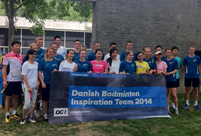 Danish badminton team plays Chinese social media users on Asia tour
 Art on eggshells
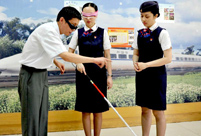 Stewardesses of CHR trains experience walk with white cane
 BFA goddess poses for graduation photos
 Chengdu police use social media to boost recruitment
 Secrets unveiled in restoration of the 800-yr-old Buddha
 Heavenly path in Chongli grassland
 Happy Birthday to "Yuanzai"
 China's manned submersible Jiaolong opens to public
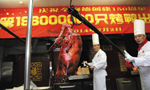 Roast Duck Restaurant celebrates 150th anniversary
Day|Week|Month