
Wed,Jun 25,2014
 High speed train attendants receive training in Chongqing
 Rare rainbow clouds seen in Fujian
 Small bracelet going global
 Aerial Photography: Amazing Tianshan Mountains
 'Animals' in 2014 World Cup
 Not afraid of death
 Chen Guangbiao ads on A15 of NYT to host charity luncheon for 1,000 poor and destitute Americans
 Passionate bar babies and fans feel the charm of World Cup 2014
 US aircraft carrier docks in HK, welcomes PLA aboard
 Graduation season: 'Take graduation photos to mark our love'
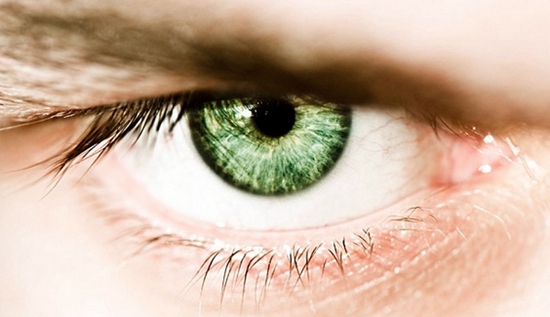 |
Scenes in "Black Mirror", a British television series first broadcast two years ago, made a deep impression on viewers as its actors were implanted with chips in their eyes and behind their ears.
With the rapid development of technology, implantable devices such as electronic tattoos, chip capsules, and internal headsets are becoming a reality... with these miniature devices, scenes from the movies are becoming part of real life.
The idea that blind people might bid farewell to darkness is no longer a dream. Extraordinary retentive memory may be within the reach even of ordinary people, transforming them into "supermen".
In fact, experimentation with implantable devices has already extended beyond medical use. Some pioneers are trying to extend their sensations to reach a world that ordinary people cannot sense, for example to 'hear' heat, or to 'feel' wireless network signals. Others have implanted invisible earphones in their ears, giving them better hearing than normal people. One 'geek' has tried to implant storage devices in his body for passwords and telephone numbers.
The world’s first permanent pacemaker was implanted in a patient’s heart in 1958. For decades, research and development of implantable devices was committed to achieving the goal of "making flawed people normal". However, the implanted device that changes an ordinary person to a superhuman goes beyond medical science. “Early adopters” enjoy the thrilling experience new technology brings, but also trigger controversy. Critics argue that applications to normal people are contrary to the spirit of medicine, blurring the boundaries of use.
The controversy over implantable devices goes deeper. There is a concern about security. As an implantable device can be monitored by virtual instruments, if hackers get access to the monitoring process the most personal of data could fall into the hands of others. And there are still questions over the safety of electronic components implanted in the human body.
Currently, the biggest concern stems from the verb "implant". In contrast to wearable devices, implantable devices subvert the user's habits. And the implantation process is very complicated. Even if a trial does not go according to plan, implantees cannot discard the devices without outside intervention. Without a one hundred percent guarantee of safety, who will be willing to let outsiders "invade" their body?
But in spite of all the initial controversy, research into implantable technology continues. We should remain vigilant to ensure that we do not need ever-increasing powers to keep those devices that have been implanted under control.
The article is edited and translated from《可植入设备考验人类驾驭能力》, source: People's Daily, author: Qiang Wei.
 Silk Road, China's Grand Canal listed as World Heritage Sites
 Chinese 'Slumdog Millionaire'
 PKU students imitate famous paintings in real-person photos
 Stewardesses in Brazilian soccer jerseys
 Puzhehei: land of idyllic beauty
 Chinese navy fleet visits Cape Town, South Africa
 PLA naval cadets toss their hats at graduation ceremony
 Graduation photo ideas: reliable alumnus and happy alumna
 Super daddies in 2014 World Cup
 Images of Xi'an: Part one
 In Pictures: Female fans of World Cup
 Girl takes father’s portrait to travel the world
 China's top 10 representative architectures
 Photo story: A day of 'mini girl'
 Top 20 hottest women in the world in 2014
 Day|Week|Month