XI'AN, May 1 -- Chinese archaeologists have employed digital scanning in an ongoing excavation of a burial pit in the ancient capital of Xi'an, where an army of terra cotta warriors guards the mausoleum of China's first emperor.
China launched a second excavation project on Thursday on Pit No.2, located near the tomb of Emperor Qinshihuang, founder of the Qin Dynasty (221-206 BC). The pit saw the unusual discovery of colorful statues during the first excavation between 1994 and 2008.
Zhu Sihong, who leads the excavation team, said advanced technologies will play a greater role in the second excavation.
The excavation team will use digital scanning to collect data on artifacts and build a database, which will facilitate future research and help preserve the site, Zhu said.
Scientists have estimated that the pit has 1,400 clay figures and horses and 89 chariots waiting to be unearthed. Though smaller than Pit No.1 in scale, the second pit features a mixed terra cotta troop of chariots, cavalry and archers.
Pit No. 2 is also famed for the unearthing of several colorful warriors, including a rare specimen with a green face, indicating that the army was once painted various colors that faded throughout the ages.
Located in Xi'an in northwest China's Shaanxi Province, the 56-square-km Mausoleum of Qinshihuang is the world's largest underground mausoleum. An army of more than 7,000 life-sized terra cotta warriors and horses was discovered at the site in 1974.
The first excavation began on Pit No. 2 in 1994 and was halted in 2008 due to a lack of personnel and advanced protective technology.
 J-11 fighters in air exercise
 Beauties dancing on the rings
 Attendants-to-be join Mr. & Miss Campus Contest
 Beijing's toughest anti-smoking law takes effect
 Family lives in cave for about 50 years in SW China
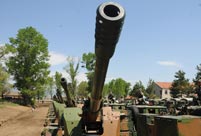 PLA soldiers operating vehicle-mounted guns in drill
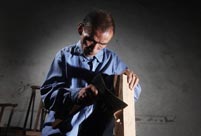 Blind carpenter in E China's Jiangxi
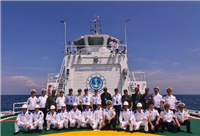 China hosts overseas disaster relief exercise for the first time
 20 pairs of twins who will become flight attendants in Sichuan
 Obama is sowing discontent in S.China Sea
 Rescuers work through night to reach cruise ship survivors
 Driving through limbo
 Facing down MERS
Day|Week