
Wed,Nov 12,2014
 Top 100 beauties in the world!
 Gallery: Who is the most beautiful one?
 If you like autumn, put your hands in the air!
 Fan Bingbing's "Queen style" in new play
 Lingerie show at 2014 Miss China
 J-10 fighters show aerobatic stunts in smog-free sky
 Charming contestants of Shanghai Int’l Model Contest
 Most amazing chi-pao beauties
 7 deadly animal attacks
Russia to launch 70 Proton rockets by 2020: official
7 deadly animal attacks
Russia to launch 70 Proton rockets by 2020: officialRegional coordination to prevent corrupt officials escaping with their illegal gains steps up China's anti-corruption efforts
The concluding document of the Asia-Pacific Economic Cooperation Economic Leaders' Meeting underlines the spirit of joint endeavor in the anti-graft field, which is well presented in the Beijing Anti-Corruption Declaration. Both promise a joint network among its members to combat corruption.
The declaration passed at the 26th APEC Ministerial Meeting held on Nov 7 and 8 and its reflection in the final document come in time to aid China's anti-graft efforts. The authorities have claimed initial success in the recent "Fox Hunt 2014" campaign to repatriate corrupt officials or their family members who have moved abroad taking their ill-gotten gains with them.
But the number of suspects brought back - slightly more than 100 - is still well below the about 18,000 officials who have fled overseas during the past two decades. According a report of People's Bank of China, the illicit money taken away by these officials exceeds 800 billion yuan ($129 billion), more than the annual revenue of the biggest telecommunication corporation of the nation.
While many fleeing officials have chosen Europe as their destination, more have fled to Asia-Pacific nations, especially Canada, Australia and the United States, where there are large well-established Chinese communities.
However, it was not their own cunning, but the lack of extradition treaties with the destination countries, that helped the "foxes" survive. Due to the differences in their judicial systems, China has not yet signed extradition treaties with many developed economies. China has extradition treaties with 38 economies, but not the US, Canada or Australia - the three most popular destinations for fleeing officials.
The Beijing Declaration brings hope of an end to this. Its first part requires participants not to become a safe haven for corruption, and encourages them to undertake extradition, legal assistance and the recovery of illegal assets.
Although this signals China accelerating negotiations for extradition treaties, more importantly, the declaration opens up a new path for China's "fox hunting", as even without extradition treaties, it can ask for "legal assistance" from nations that are signatories to the declaration.
Further, according to the principle of the declaration, the signing parties will share data and information. Many officials choose to flee when they are no longer able to hide clues to their corruption, but by the time judicial staff have followed up these clues they are already overseas. The declaration makes it possible for foreign customs offices to receive the information that they are wanted for corruption when they start the journey, and so reject their entrance upon landing. In other words, the way out for "fleeing foxes" will be cut.
Other measures such as establishing an APEC anti-graft and law enforcement office, and strengthening international cooperation through the construction of a multilateral network, will all help weave a seamless net to trap fleeing officials in the Asia-Pacific region.
That net echoes China's ongoing anti-graft efforts to "shut power in a cage of laws", which features filling in loopholes in the country's anti-corruption laws and strengthening enforcement of them. As Chinese officials know they will face the joint judiciary of most countries and economies within the region should they trade power for money and then seek to leave the country with their illegal gains, they might forgo the temptation of seeking to profit from their positions.
Besides aiding China's anti-graft efforts, the declaration is also expected to further support the prosperity of economies in the region. Facilitating trade, investment and services has been a consistent theme of APEC, but efforts to build interconnected markets within the Asia-Pacific have long been curbed by different market standards and the high cost of corruption.
A firmer iron hand that strikes corruption will not only purify the market environment, it will also boost entrepreneurs' confidence in the region, boosting investment and trade. Besides, there is also an onus on enterprises to prevent corruption losses because the declaration requires signing parties to return revenues confirmed illegal.
Another noteworthy point is that China has for the first time set the agenda for APEC and rallied wide support. Corruption is a common headache, but only in China is it so rampant. By successfully taking the lead in international cooperation, China has shown the world its confidence in playing a bigger role with higher influence in multilateral diplomacy.
Global governance is realized through the cooperation of all participants and China needs to practice its skills with a meaningful mission, and anti-corruption cooperation is certainly one of the kind.
Connectivity is a key word at this year's APEC meetings, and the Beijing Anti-Corruption Declaration is an excellent example of interconnection. We expect it to be well implemented.
The author is a professor on anti-graft studies at the Party School of the Central Committee of CPC.
 World Pole Dance Championship in China
 In pics: PLA stages live-fire drill in NE China
  59-year-old Liu Xiaoqing still looks stunning
 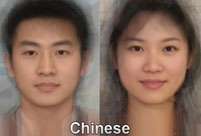 Standard faces for each countries in the world
 Shocking! Photos of Chinese fighters revealed
 Images of angels in white: At work v.s off work
  Post-85s female pilots and their mission
 Netizens fall in love with champion swimmer Ning Zetao
 Vibrant 21-year-old and her own Cheongsam brand
 Top 10 most dangerous jobs in the world
  Top 10 fifth generation jet fighters in the world
 Top 10 Chinese goddesses
  Top 20 hottest women in the world in 2014
 Top 10 pure beauties in showbiz
  Top 10 world's highest-paid models 2014
 The most gorgeous Chinese women
 Top 10 most handsome faces in Asia
Day|Week|Month