
Mon,Jun 23,2014
 Not afraid of death
 Chen Guangbiao ads on A15 of NYT to host charity luncheon for 1,000 poor and destitute Americans
 Passionate bar babies and fans feel the charm of World Cup 2014
 US aircraft carrier docks in HK, welcomes PLA aboard
 Graduation season: 'Take graduation photos to mark our love'
 College-student-turned nun becomes famous on Internet
 Japanese airplanes tail Chinese warplane in China's ADIZ
 China applies for UNESCO listing of Nanjing documents
 Picturesque scenery in Hongcun Village
 Japan's PM vows to resume commercial whale hunt
Iran "strongly" opposes a U.S. intervention in neighboring Iraq, Iran's Supreme Leader Ayatollah Ali Khamenei said on Sunday, as armed Sunni insurgents continue to seize Iraqi cities and thwart security forces.
"The Islamic republic is strongly against any U.S. intervention in Iraq's internal affairs and believes that the Iraqi people, government and the country's religious leaders are able to end the violence," Khamenei was quoted as saying by the Iran's official news agency IRNA.
"Western countries, especially the United States, are behind the scenes of violence in Iraq," he said, adding that "the United States wants to control Iraq and to keep its 'Yes Men' in power."
Violence in Iraq deprives Iraqis of their "achievements," and the United States "is not pleased" with the elections and institutionalization of democracy in the country, he said.
Khamenei rejected the notion that Iraq's crisis is a war between Shiite Muslims and Sunni Muslims, saying it is instead a " plot" to destabilize Iraq and threaten its integrity by members of the former Iraqi regime and the extremist groups.
"The main conflict in Iraq is between those who are seeking Iraq's independence and those who favor Iraq joining the U.S. camp, " he said, stressing that "Iran opposes the U.S. and others' interference in Iraq and does not endorse it."
World powers are deadlocked over a deteriorating situation in Iraq, as the rebels of Islamic State of Iraq and the Levant (ISIL) has scored sweeping victories across the country, overrunning several major cities in northwest and central Iraq, including the second city Mosul.
The intensifying fight, with ever stronger sectarian overtones, is raising fears that the violence might push the country towards a civil war.
The supreme leader's comments came after the United States announced last Thursday that it is prepared to send up to 300 military advisers to Iraq to train, advise, and support Iraq's embattled forces in their fight against the insurgency, though it also ruled out sending combat troops. Earlier, U.S. Secretary of State John Kerry said the Obama administration was looking into a "range of options" that could help Iraqi security forces after the Iraqi Prime Minister Nouri al-Maliki reportedly asked for American airstrikes against the Islamist militants.
The Islamic republic has denied that it will send any military forces to help Iraqi government in its fight against the ISIL, but Iranian President Hassan Rouhani has recently said that Iran would do everything to protect Muslim Shiite shrines in Iraq.
According to Press TV, the president said that sponsors of terrorism and extremism should be weary that the "terrorists" will one day turn against them.
"Look at the massacre they have carried out across the Muslim world, ranging from Afghanistan and Pakistan to Syria, Iraq, Lebanon and everywhere," Rouhani said, urging a collective effort by the scholars, political parties and non-governmental organizations in the Islamic countries to launch a campaign against violence in the region.
The Iranian president also blamed Israel for "plotting to sow discord" among Muslims in the regional countries.
Meanwhile, Majlis (parliament) speaker Ali Larijani urged the Iraqi government to assure that all of Iraq's ethnic groups participate in the political arena, Press TV reported on Sunday.
He added that those who encourage division are opposed to a democratic political structure and want to create tension.
On Sunday, Iran's influential cleric and Chairman of the Expediency Council, Ayatollah Akbar Hashemi Rafsanjani, said that "Iran does not want to interfere in other countries' internal affairs, but we hope to act as a mediator to stop violence in Iraq, " according to IRNA.
 Stewardesses in Brazilian soccer jerseys
 Puzhehei: land of idyllic beauty
 Chinese navy fleet visits Cape Town, South Africa
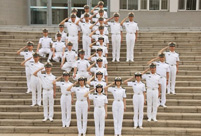 PLA naval cadets toss their hats at graduation ceremony
 Graduation photo ideas: reliable alumnus and happy alumna
 Super daddies in 2014 World Cup
 College girls take stylish photos to help enrollment
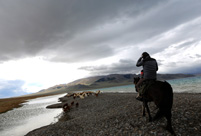 Rebuilding the silk road
 Top 10 Chinese products scoring World Cup goal
 In Pictures: Female fans of World Cup
 China's top 10 representative architectures
 Photo story: A day of 'mini girl'
 Top 20 hottest women in the world in 2014
  Cute animals' leisure summer in zoo
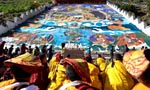 Exhibition of the Buddha held in Tibet
Day|Week|Month