Communing with nature
By Chen Liang
KUNMING _ The Yunnan
Tropical Plant Institute of the Chinese Academy of Sciences near Menglun, Mengla County in
Xishuangbanna offers such a fascinating glimpse into the plant world that I have visited
it twice.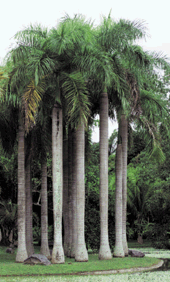
My trips gave me the
chance to gain a deeper insight into the distinctive charm of the institute's famous
botanic garden. Established in 1959 by the late noted botanist Cai Xitao, it was the first
tropical plant garden in the country.
Nurturing about 3,000
species of tropical and subtropical plants including many rare and endangered species, it
might also be one of the largest.
My first visit was in
the dry season in Xishuangbanna, which usually extends from September to May.
Guided by a pretty local
Dai girl, I made a one-hour trip to the core area of the garden which covers 1,000
hectares on an island shaped like a gourd. Under the scorching sunshine, the trip was
exhausting.
I visited the plum
garden and the arboretum. The plum garden, with a big pond embellished with beautiful
lotuses, impressed me very much.
But there were too many
tourists and guides strolling around, which dashed my hopes of communing with nature and
savouring the charm of the beautiful garden.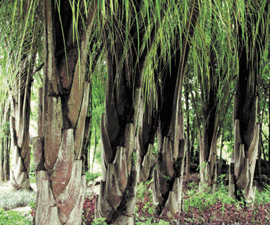
Recently I made another
trip to Mengla in the wet season. I decided to choose the guesthouse of the plant
institute at the centre of the botanic garden for a one-night stay, giving me the chance
to stroll around the garden after dusk and in the morning.
When I checked in at the
guesthouse, the Science and Technology Exchange Centre of the institute, at 5:00 pm, it
was raining heavily.
From the balcony of my
second-floor room, I had a good view of the garden with its lushly growing plants.
After dinner, it stopped
raining, so I decided to explore the garden by myself.
Unlike the first time,
the garden was empty and tranquil. After the rain, the air was clear and refreshing. I
could distinguish the flavours of the soil, the leaves of some trees, and flowers of
plumeria obtusa.
Along the well-paved
road, I walked to the plum garden. This time the trees looked different. With tall and
straight trunks and tidy crowns, they looked really graceful.
There is a lane
stretching from the plum garden into the arboretum. Walking along it, I saw human-size
vines, dark green ferns, various sago cycas trees and huge banyan trees with numerous air
roots hanging down to the ground.
As the screen of
darkness fell, fireflies floated out of the forest in their thousands, giving off flashes
of light in the darkness.
 Listening to the croaking of frogs in the
forest and following the fireflies back to the guesthouse, I really felt I was communing
with nature this time.
Listening to the croaking of frogs in the
forest and following the fireflies back to the guesthouse, I really felt I was communing
with nature this time.
Next morning, I was
woken by the whistles of peacocks and gibbons who had made their home in the garden. So I
went for another walk and found the extraordinary beauty of various tropical and
subtropical plants and flowers.
I saw rock-like
Stephania epigaea, some species of the Palmae family with stalactite-like fruits hanging
down from the trunk, weird-looking bamboos and colourful flowers.
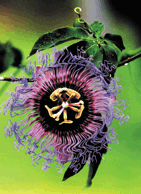
The purple flowers of
the passion fruit impressed me tremendously. With tender skin and a graceful shape, the
flowers looked too beautiful to be real.
Photographer Yang
Shizhong focused his lens on these unique plants and captured the distinctive charm of the
botanic garden.
(Photos: top: Wax palm; next
to top: Palm)
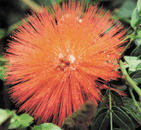 Mimosa
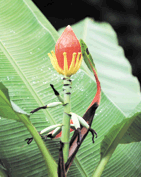
Scarlet banana